


5 Pieces 1.8uH 1/4W Inductor Epoxy Coated RF Choke Coil | US Ship
7 in stock
7 in stock
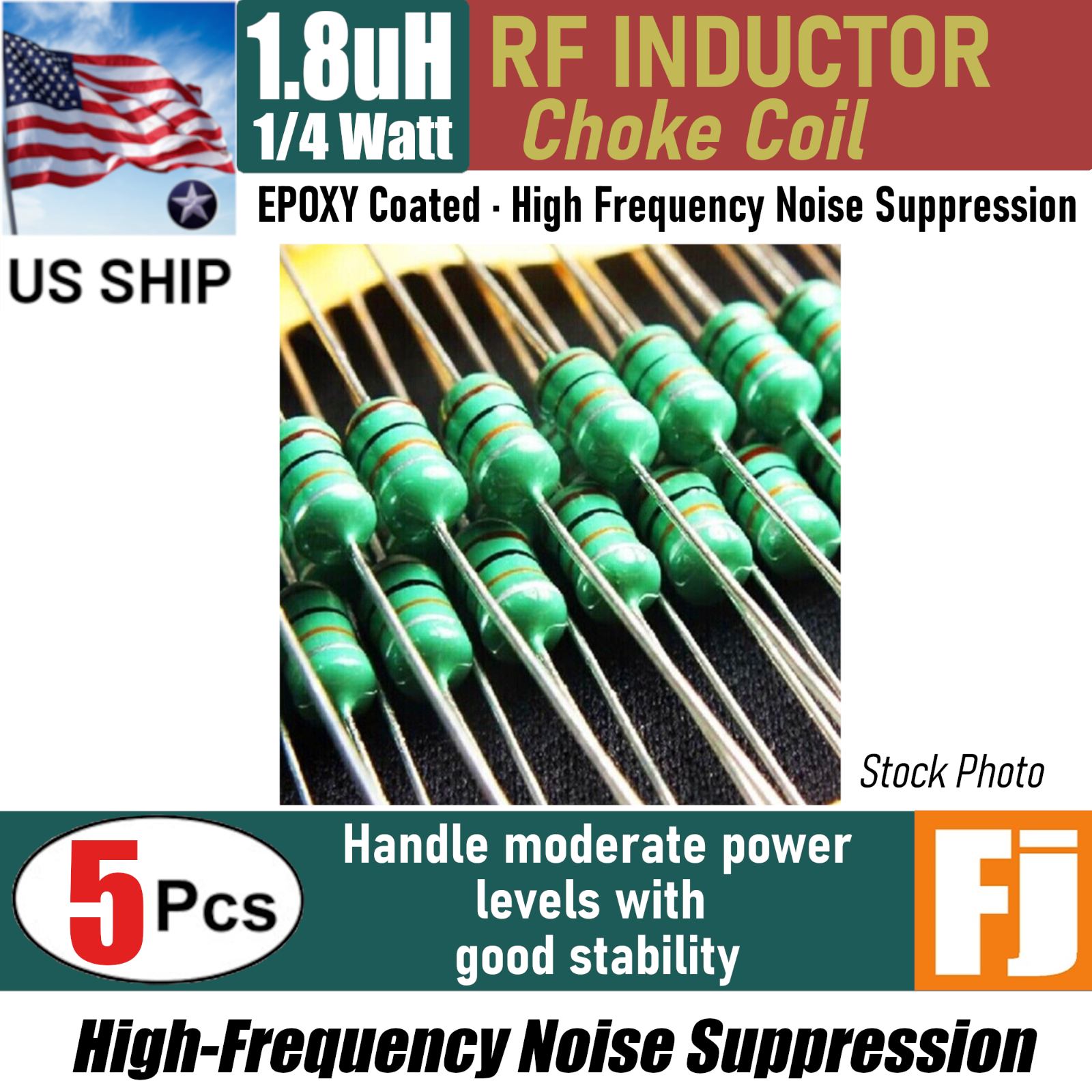
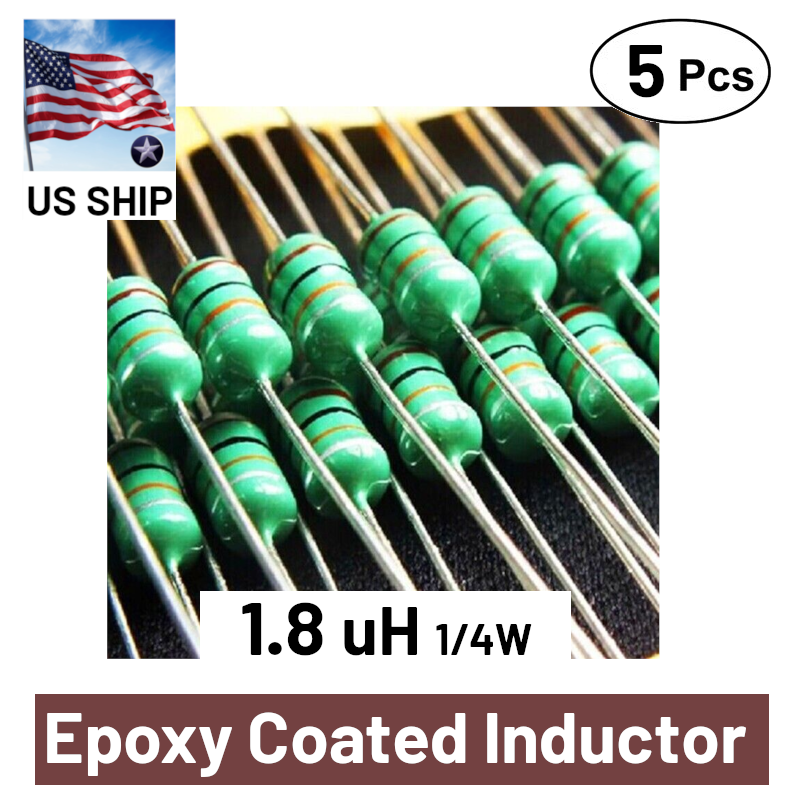
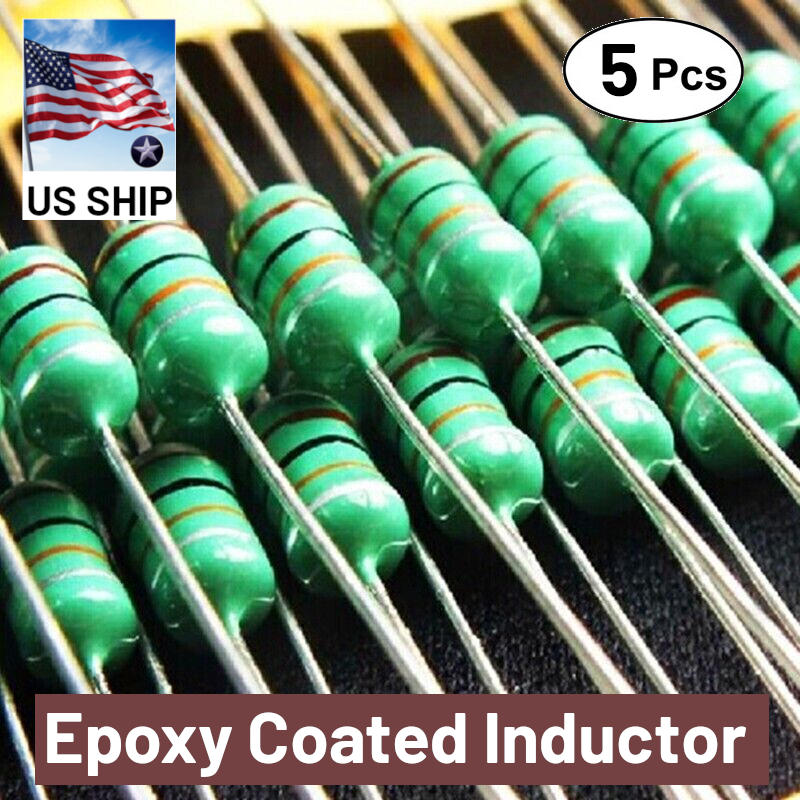
5x 1.8uH Inductor RF Coil
Optimize your circuit designs with our high-performance 5-piece set of 1.8uH, 1/4W Inductor RF Choke Coils. Engineered for precision, these epoxy-coated inductors ensure reliable performance in demanding electronic applications.
- Inductance: 1.8uH Tolerance
- Rated Current: 200mA
- Voltage Rating: 50V
- Package Type: Axial Lead
- Efficiency: High Q Factor
Perfect for RF filtering and signal processing, elevate your projects with these premium inductors. Ideal for engineers looking to enhance performance and efficiency.
| Shipping: | |
| Estimated Delivery: | Ships on Tue, May 19, Delivery Estimated between Tue, May 26 and Fri, May 29 to 92783 |
Item Specifics
Brand:Unbranded | Length:9 mm |
Shipping:Economy (USPS First Class Envelope unless upgraded) | Country of Origin:USA |
Mounting Type:Through Hole | Manufacturing Process:Wound |
RoHS Compliant:Yes | Moisture Sensitivity Level:Not Applicable |
Storage Temperature Range:-55°C to +130°C | Saturation Current:0.6 A |
ESR:Low | Frequency:Up to 100 MHz |
Impedance:50 Ω at 100 MHz | Lead Length:25 mm |
Lead Diameter:0.5 mm | Diameter:3 mm |
Part Name:5 Pieces 1.8uH 1/4W Inductor Epoxy Coated RF Choke Coil | Package Type:Axial |
Application:RF Circuits | Self-Resonant Frequency:200 MHz |
Q Factor:25 (at 25 MHz) | Operating Temperature Range:-55°C to +125°C |
Current Rating:0.5 A | DC Resistance:0.03 Ω |
Core Material:Ferrite | Tolerance:±10% |
Coating:Epoxy Coated | Inductor Type:RF Choke Coil |
Power Rating:0.25 W | Inductance:1.8 uH |
Quantity:5 | Upgrade Shipping:Purchase $25 or more get free USPS G/A shipping Upgrade |
5 Pieces 1.8uH 1/4W Inductor Epoxy Coated RF Choke Coil | US Ship
Product Details:
Enhance your electronic circuits with our top-quality 1.8uH 1/4W Inductor RF Choke Coil. These inductors are perfect for RF applications, featuring epoxy coating for durability and reliability. Ideal for engineers and hobbyists working on radios, transmitters, and other RF equipment.
Specifications:
- ✅ Quantity: 5 Pieces
- ✅ Inductance: 1.8uH
- ✅ Power Rating: 1/4W
- ✅ Coating: Epoxy
- ✅ Type: RF Choke Coil
- ✅ Frequency Range: Suitable for various RF applications
- ✅ Application: RF circuits, signal filtering, and oscillators
Features & Benefits:
- ✔️ Designed specifically for high-frequency applications
- ✔️ Epoxy coating ensures stability and reduces interference
- ✔️ Compact design allows for easy incorporation into circuits
- ✔️ Reliable performance for consistent signal filtering
- ✔️ Ideal for enhancing signal integrity in advanced electronic projects
Shipping Information:
We offer FREE Shipping on all orders!
Your order will be shipped as quickly as possible, typically via USPS First Class. Tracking is provided through USPS Informed Visibility. You will receive tracking updates via email from First Class Track, a web service that manages USPS First Class tracking for Fahmah Jackson.
Orders are dispatched within 1 business day of receiving payment (Monday–Friday) from our location in Chester, New Hampshire, US. We take pride in providing fast and efficient shipping services to our customers.
Orders addressed to Freight Forwarders violate eBay policies and will be canceled unless upgraded to USPS Ground Advantage for improved delivery reliability.
For customers within the **US**, you should expect to receive your order within seven business days from the dispatch date.
In the unlikely event that your item is lost or damaged during shipping, we take full responsibility and will promptly resolve the issue. We will either provide a full refund or send a replacement to ensure your satisfaction.
If you prefer expedited shipping or additional tracking services, you may choose upgraded shipping options during checkout to suit your needs.
An item is considered missing if not received within eight business days from the shipping date. If this occurs, you have the following options:
- Option 1: Request a full refund from support@fahmahjackson.com You may alternatively request a reship if at all possible.
- Option 2: Instead of opening a case, request a resend of the missing product, and we will promptly ship a replacement.
Returns:
If you are not 100% satisfied with your purchase, you may return the product for a full refund or exchange it for another item, whether similar or not.
Returns are accepted for up to 30 days from the purchase date.
All returned products must be in their original condition and original packaging. Please retain your receipt for verification.
© 2025 Fahmah Jackson LLC. All Rights Reserved.
There are no reviews yet.